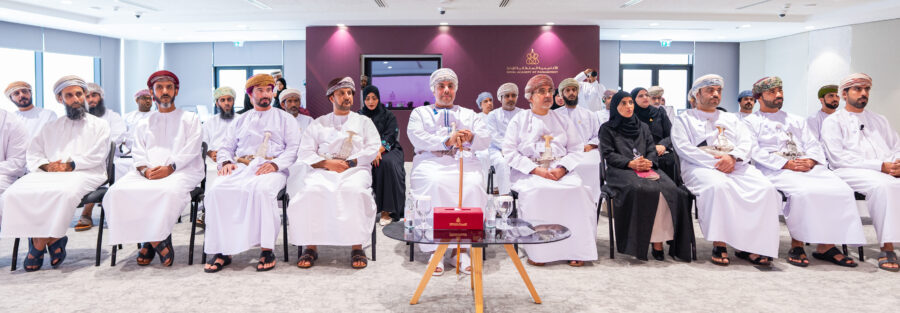
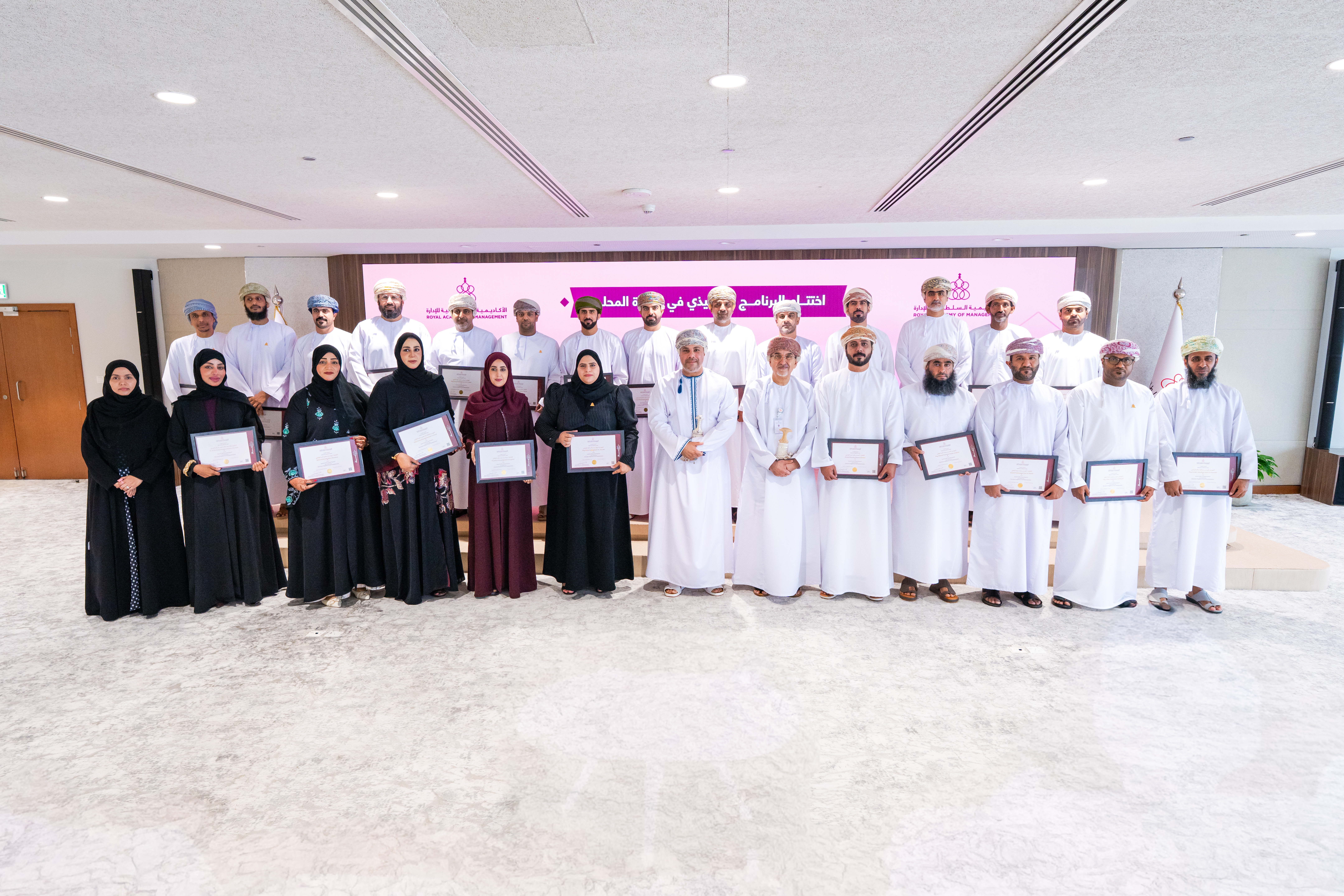
Under the patronage of His Highness Sayyid Marwan bin Turki Al Said, Governor of Dhofar, the Royal Academy of Management concluded the Executive Programme in Local Administration, reinforcing its commitment to developing qualified national leadership and advancing sustainable development across Oman’s governorates.
The programme brought together 25 local-administration leaders in an integrated executive learning experience, designed to strengthen their readiness to contribute effectively to the empowerment of governorates and the realisation of Oman Vision 2040.
Combining contemporary management knowledge with practical application, the programme covered development planning, project management, leadership, effective administration, sustainable development and local investment. It also explored innovation, emerging technologies, partnership and stakeholder management, the foundations of local administration, strategic planning, investment mapping and the adoption of innovative solutions to support digital transformation.
His Excellency Dr Ali bin Qassim Al Lawati, President of the Royal Academy of Management, said that the programme reflects the continued attention of His Majesty Sultan Haitham bin Tarik – may Allah protect and preserve him – and His Majesty’s emphasis on establishing a decentralised administrative structure that elevates service delivery and development outcomes across the governorates.
He added that the programme aligns with the RAM’s commitment to preparing national leaders capable of leading local development with efficiency and impact. Empowering local leaders, he noted, is essential to advancing decentralisation and enabling governorates to harness their capabilities and resources in pursuit of sustainable development.
Dr Al Lawati further explained that the RAM’s specialised executive programmes are designed to go beyond the transfer of knowledge, building practical and applicable capabilities that enhance administrative practices, improve performance and enable participants to turn local challenges into development opportunities, solutions and initiatives with tangible impact.
Dr Fathiya bint Abdullah Al Rashdi, Vice-President for Programme Affairs, described the programme’s conclusion as an important milestone in developing leadership capabilities in local administration and development. She highlighted the programme’s strategic value in delivering an integrated applied-learning experience that enabled participants to use modern management tools effectively.
She added that the programme created a dynamic platform for exchanging expertise and engaging with development priorities linked to local administration. Its impact was reflected in the practical perspectives developed by participants and their commitment to applying the knowledge gained to enhance operational efficiency and create sustained impact within their organisations.
Shaikha Al Maskari, Programme Supervisor, said that the programme had been designed as a comprehensive applied-learning journey, tailored to equip local-administration professionals with practical tools across planning, implementation and effective follow-up. The experience, she said, enabled participants to draw on real workplace contexts as they developed initiatives, projects and sustainable partnerships.
As part of the programme, participants undertook a study visit to the Kingdom of Morocco, where they explored advanced practices in local administration, decentralisation and governance. The visit provided insights into service digitalisation, government performance development and leadership-preparation programmes, while contributing to stronger cooperation and partnerships between the Sultanate of Oman and the Kingdom of Morocco.
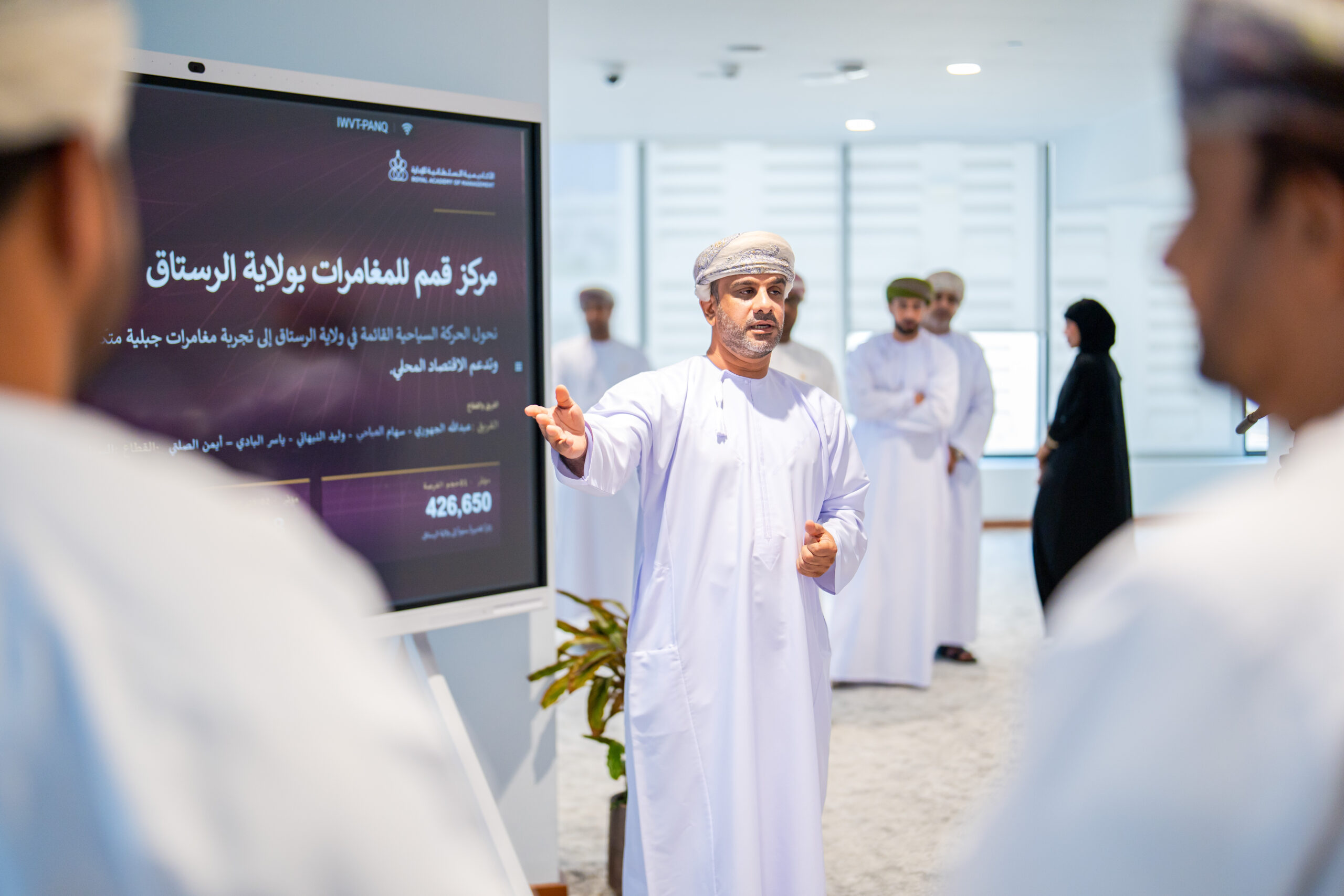
Participants commended the programme for its contribution to their professional development. Engineer Siham Al Miyahi from South Al Batinah Governorate said that the programme had strengthened her skills in analysis, strategic planning, feasibility studies, impact measurement and partnership-building. She also highlighted its role in enhancing her ability to transform local challenges into sustainable development opportunities, citing the “Qimam” Mountain Adventures project in Al Rustaq as an example of an initiative developed through the programme’s learning outcomes.
Engineer Hamoud Al Nadabi from Al Dakhiliyah Governorate described the programme as a valuable experience that enhanced his capabilities in management, leadership, planning and decision-making. He praised its blend of theoretical knowledge and practical application, alongside field visits, mentoring sessions and the exchange of expertise among participants from governorates across Oman.
Bahiya Al Hashimi from South Al Sharqiyah Governorate said that her participation had strengthened her skills in coordination and stakeholder management, as well as her ability to analyse reports, identify gaps and redirect work more effectively. She noted that the programme had deepened her understanding of the role of coordination and follow-up in supporting local development objectives.
Engineer Badr Al Masroori from South Al Sharqiyah Governorate said that the programme had expanded participants’ knowledge of municipal legislation, local governance, financial and investment planning. It also strengthened skills in strategic planning, innovation, leadership and community engagement, contributing to improved performance and more informed decisions in support of local development.
The closing ceremony featured an accompanying exhibition, where participants showcased applied projects developed during the programme. These included “Madar”, which presents sustainable solutions for transforming fish waste in Sinaw into products of economic value; the Clay Science Centre, dedicated to preserving and sustaining earthen architecture through research, training, testing and consultancy; the Qimam Adventures Centre, offering integrated mountain-tourism experiences in South Al Batinah Governorate; and the Al Jabal Al Akhdar Centre for Agricultural Propagation and Innovation, which aims to support agricultural propagation and promote agritourism in Al Dakhiliyah Governorate. The exhibition also featured a construction and demolition waste recycling station project, designed to convert waste into investment value and support sustainable transport solutions.
The Executive Programme in Local Administration forms part of the Royal Academy of Management’s ongoing efforts to develop national capabilities, enhance government performance and support the objectives of Oman Vision 2040, while embedding modern and sustainable administrative practices across the governorates of the Sultanate of Oman.